Switchover Ratio to the NATULON® Zipper Series Breaks the 50% Mark
2026-06-30
Switchover Ratio to the NATULON® Zipper Series Breaks the 50% Mark
Behind the Switchover: An Interview with the General Manager of the Sustainable Product Strategy Department, Product Strategy Division (Part 1)
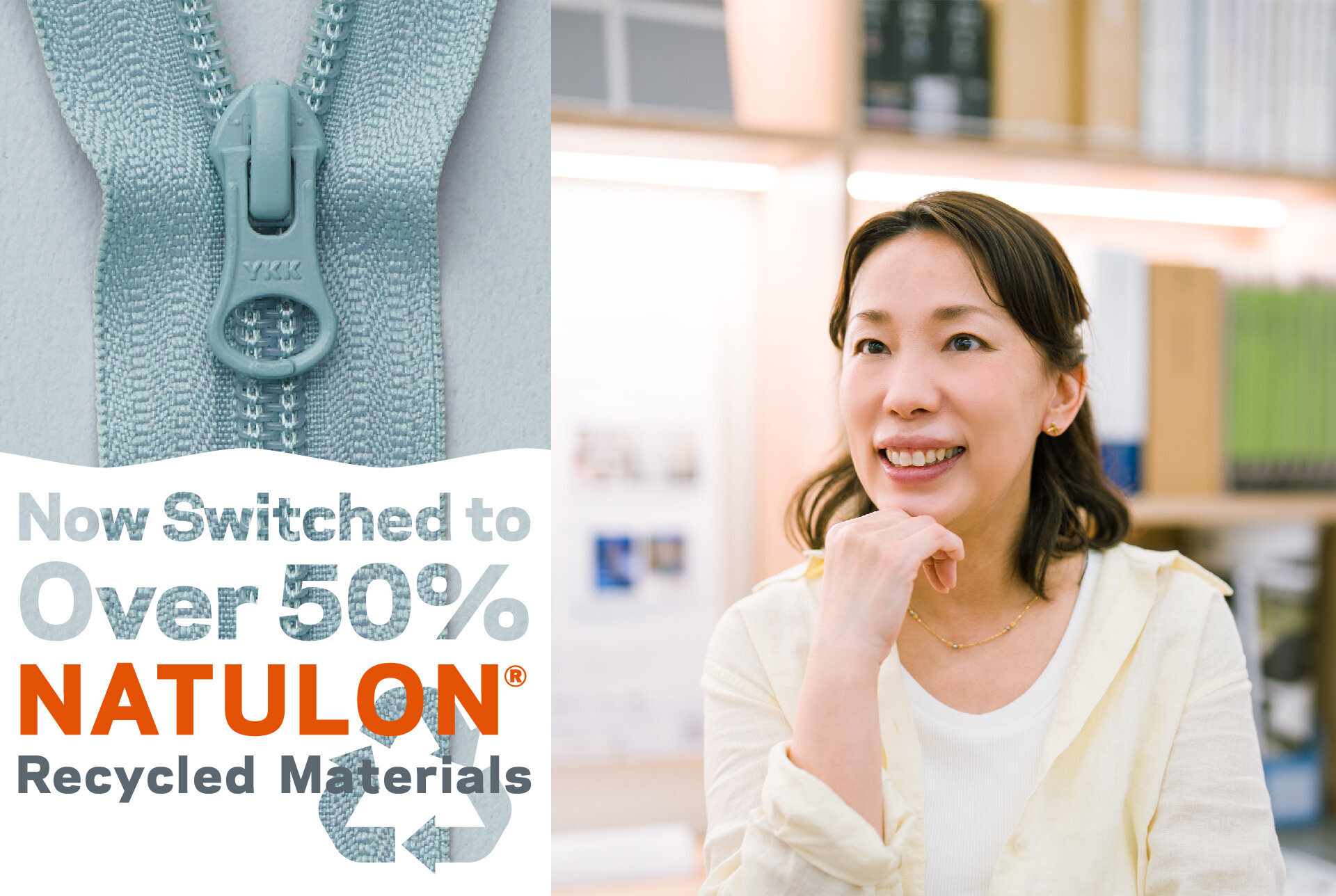
Although the number of products made from recycled material is increasing, most of them are limited to specific product lines.
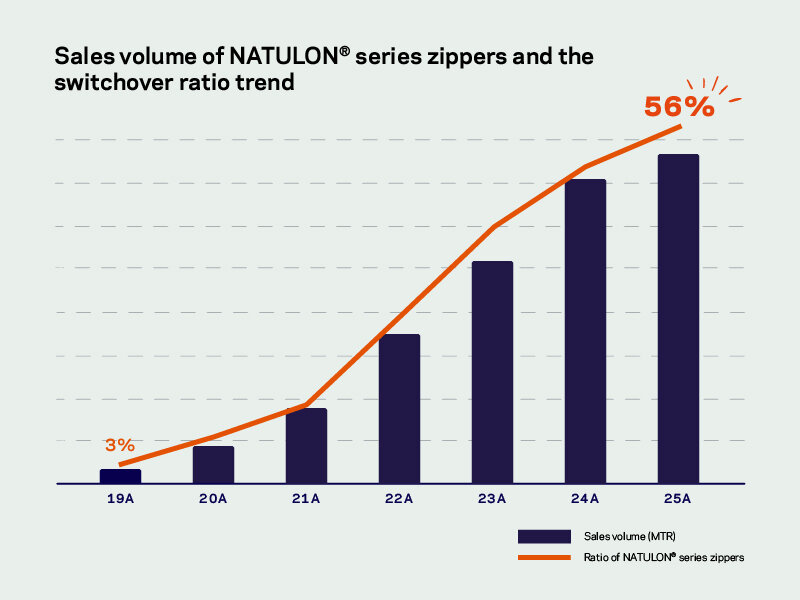
It is not easy to balance “being environmentally friendly” with “being a viable business.” At YKK, the switchover ratio to the NATULON® zipper series, which uses recycled material, has broken the 50% mark globally. Why has the switchover ratio, which stood at just 3% in 2019, grown so much?
This article will explore the decisions and changes that took place within the company to make NATULON® not just a special option but the norm
SUSTAINABILITY
■ What is the NATULON® zipper series?
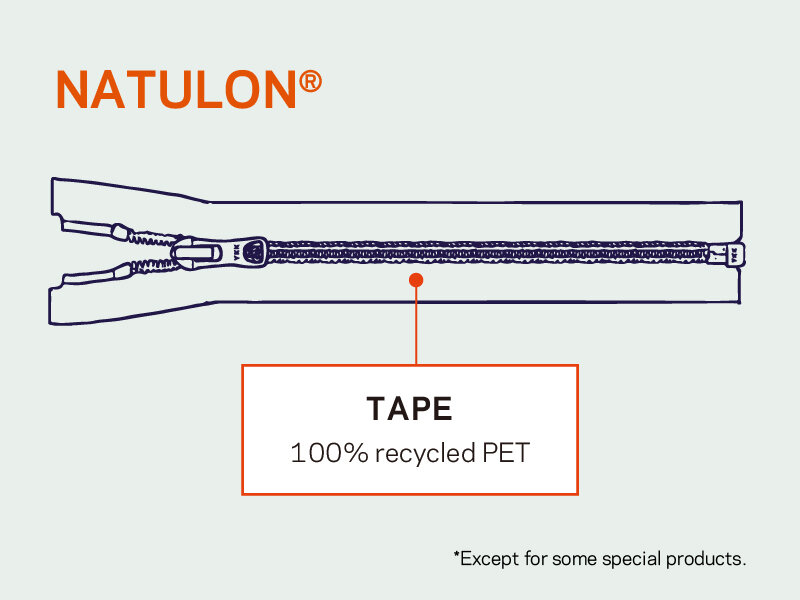
The products in the NATULON® zipper series use recycled material for the tape. There are several types, depending on the parts where recycled material is used and what the material is sourced from. The best-selling type is YKK’s flagship product, NATULON®.
––To get right to the point, please tell us about the environmental challenges surrounding the fashion industry.
Suzuki:
Making apparel involves a very long process, going from raw material production to processing and transportation. As a result, it tends to have a significant environmental impact. In particular, I believe that the high levels of CO₂ emissions and excessive consumption of material resources resulting from mass production, mass disposal, and mass consumption are major challenges. According to a report by the Ellen MacArthur Foundation, the GHG emissions created by textile production amount to approximately 1.2 billion tons annually, which is more than the combined emissions from international aviation and international shipping.
––––So NATULON® zippers attempt to address those challenges.
Suzuki:
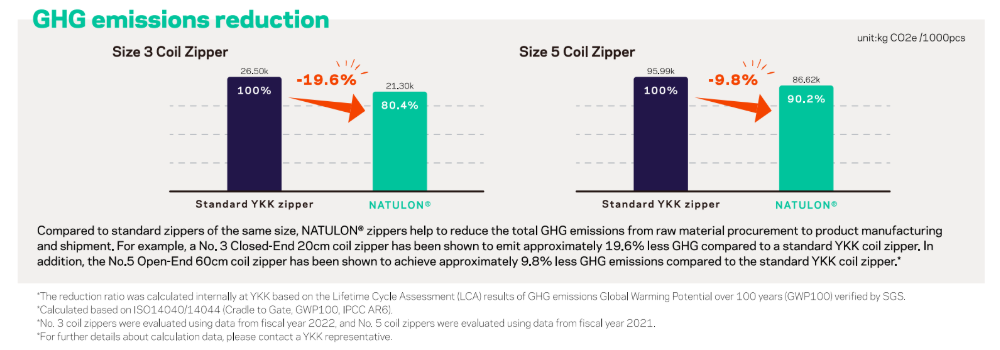
YKK is committed to manufacturing fastening products that help reduce environmental impact, even if only slightly, and contribute to resource recycling. Since the recycled materials used for NATULON® are derived from waste, they promote the reuse of material resources, leading to the effective utilization of waste materials and reduced consumption of new fossil resources. In addition, the recycled yarn used for the NATULON® has lower GHG emissions than Standard YKK zipper, as evidenced by its life cycle assessment (LCA) data.
■ The Path Laid Out by the YKK Sustainability Vision 2050
––How are the YKK Sustainability Vision 2050 and NATULON® connected?
Suzuki:
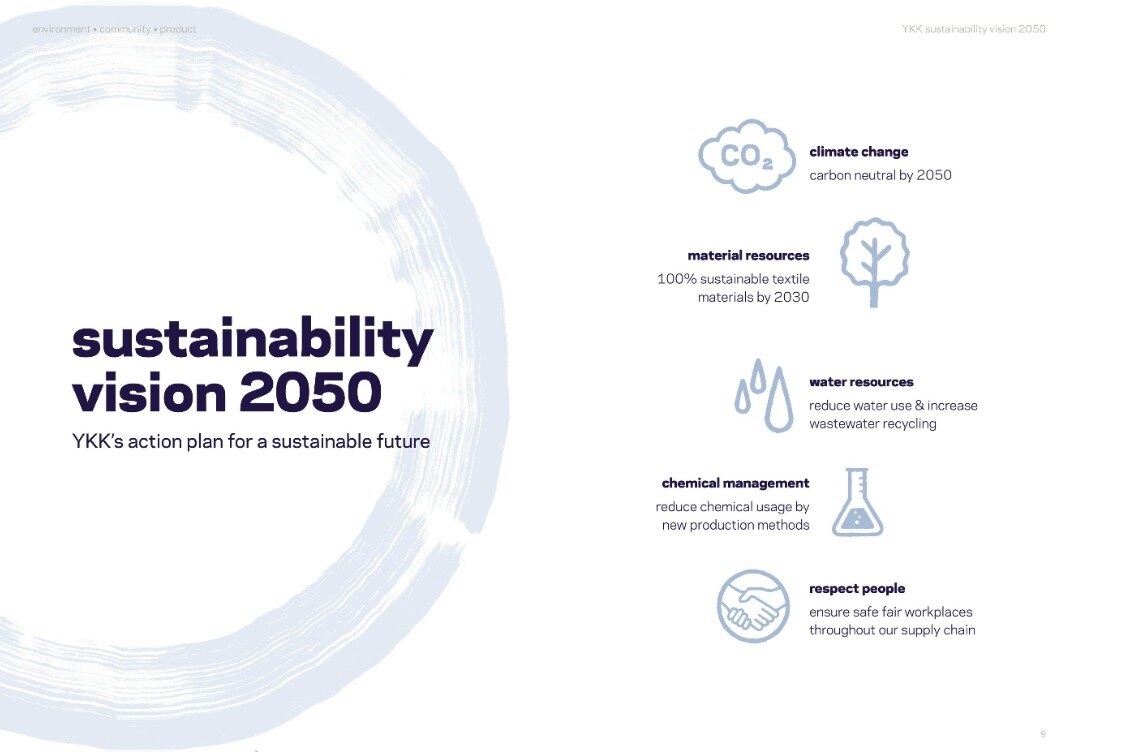
The Sustainability Vision includes a variety of goals. For example, in the “Material Resources” category, there is a major goal of ensuring that 100% of the textile materials used in YKK’s fastening products come from sustainable sources by 2030.
This has led to the switchover to NATULON® zippers. As touched on in the first article, “From the YKK Philosophy of the ‘Cycle of Goodness®’ Comes NATULON®” on the YKK Digital Showroom website, we took on the challenge of using recycled polyester starting in the 1990s, and NATULON® symbolizes those efforts. We currently have a system that allows us to supply NATULON® to over 70 countries around the world.
–––––––NATULON® is positioned as a material which contributes to greater sustainability in the fashion industry. –It seems like the series could be added to the lineup as value-added products, but are we moving forward with switching over to NATULON® for core products?
Suzuki:
That’s right. YKK was quick to recognize the growing societal emphasis on sustainability. We independently established our strategy for making the switch, and have been steadily implementing it.
■ The switchover ratio to the NATULON® zipper series has broken the 50% mark
–In FY2025, sales volume for zippers in the NATULON® zipper series, including NATULON®, exceeded 50% of sales as a whole, marking a major milestone for YKK. What does achieving a 50% switchover ratio mean in this context?
Suzuki:
We filed a trademark application for NATULON® in Japan in 1997. Although it’s actually been around for a long time, it didn’t sell very well for more than 20 years after that application. While we began the switchover in earnest in 2021, before we started doing so, the sales volume of NATULON® zippers in 2019 was 3% of all sales. Since establishing the “Sustainability Vision 2050” in 2020, we have rapidly advanced quality improvements and expanded our production bases, and have now surpassed a 50% global switchover ratio.
––It’s amazing how much that number has grown since the decision was made to switch over. Seeing that growth ratio–from 3% to 50%–really drives home the significance of our efforts. The fact that the switchover has progressed this far on a global scale truly marks a major milestone.
Suzuki:
This is a tremendous achievement made possible by the collective efforts of everyone at YKK factories around the world. Even if we were to cater to public demand, NATULON® would not multiply. That is precisely why we, as a company, decided not to take a passive approach, but to proactively move forward with making the switch.